
Chris plays an easy game and Jake plays a brutally difficult one on this episode of WIRED’s gaming podcast.
The post Game|Life Podcast: Some Like It Brutally Difficult appeared first on WIRED.

Source: Wired.com Top Stories
Unrelated to the whiskey.

Chris plays an easy game and Jake plays a brutally difficult one on this episode of WIRED’s gaming podcast.
The post Game|Life Podcast: Some Like It Brutally Difficult appeared first on WIRED.
Source: Wired.com Top Stories
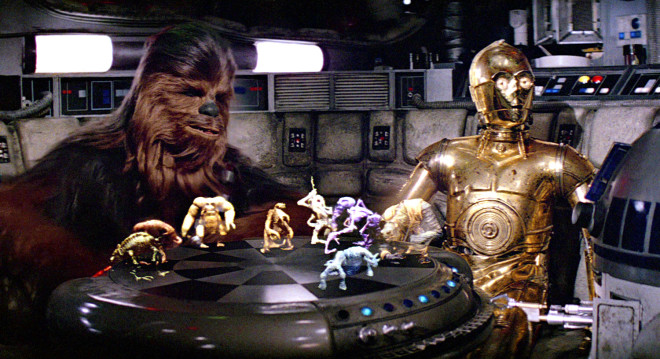

There’s a ton of fan service in the blockbuster. But the reappearance of a holographic board game just might be the best.
The post The Untold Story Behind The Force Awakens’ Best Easter Egg appeared first on WIRED.

Source: Wired.com Top Stories


It’s pronounced “hoo-gah.”
The post Blizzard 2016 Got You Down? Embrace the Danish Concept of Hygge appeared first on WIRED.

Source: Wired.com Top Stories

 This month the U.S. Government’s Copyright Office launched a public consultation to evaluate the effectiveness of the DMCA’s Safe Harbor provisions.
The study aims to signal problems with the current takedown procedures and addresses the repeat infringer issue that affects ISPs, copyright takedown abuses, and the ever-increasing volume of DMCA notices.
An issue that’s been high on the agenda are requests from copyright holder groups to ensure that content “stays down” after it’s removed. For example, when Google removes a copyrighted image from its search results, it should ensure that it doesn’t reappear under another URL.
This “take down, stay down” approach is being pushed by industry groups including the MPAA and RIAA who believe that the current takedown procedures are not effective.
However, not everyone welcomes tighter rules. In particular, the recent proposals struck a nerve with the Electronic Frontier Foundation (EFF) who warn against such broad copyright filters.
“Now, some lobbyists think that content filtering should become a legal obligation: content companies are proposing that once a takedown notice goes uncontested, the platform should have to filter and block any future uploads of the same allegedly infringing content,” the EFF’s Elliot Harmon notes.
“Filter-everything would effectively shift the burden of policing copyright infringement to the platforms themselves, undermining the purpose of the safe harbor in the first place.”
One of the problems is that copyrighted content may be infringing on one site, but not on another. For example, a video creator may want to take down infringing copies of his work, but that doesn’t mean that all the licensed versions should be removed from the web too.
In addition, the EFF points out that automated takedown tools are far from perfect. The takedown ‘robots’ that copyright holders employ often make mistakes, removing access to content that’s not infringing at all.
“Here’s something else to consider about copyright bots: they’re not very good,” Harmon writes.
“Content ID routinely flags videos as infringement that don’t copy from another work at all. Bots also don’t understand the complexities of fair use. In September, a federal appeals court confirmed that copyright holders must consider fair use before sending a takedown notice,” he adds.
The EFF does agree with copyright holders that the DMCA notice-and-takedown procedure isn’t perfect. But, instead of more strict filtering they would like more safeguards to ensure that free speech and fair use are protected. This is not the case at the moment.
“You don’t need to look far to find examples of copyright holders abusing the system, silencing speech with dubious copyright claims,” Harmon notes.
“Under the filter-everything approach, legitimate uses of works wouldn’t get the reasonable consideration they deserve. Even if content-recognizing technology were airtight, computers would still not be able to consider a work’s fair use status,” he adds.
The above clearly shows that there’s a great divide on how the DMCA takedown process should operate and what changes the U.S. Government should implement.
Considering the parties involved and the stakes at hand, copyright holders, Internet services and ISPs will do everything in their power to convince the Copyright Office that they know what’s best for the future of the Internet.
Source: TF, for the latest info on copyright, file-sharing, torrent sites and ANONYMOUS VPN services.
Source: TorrentFreak

 Over the past several years few individuals operating in the anti-piracy space have received more press than Henrik Pontén. Loved by rights-holders and hated by many pirates in equal measures, Pontén has been a thorn in the side of dozens of file-sharing sites.
The chief lawyer of Rights Alliance, which counts major Hollywood studios among its members, Pontén has definitely made a unique mark on file-sharing history.
Deeply involved in the prosecution of The Pirate Bay, Pontén made many enemies. In 2009 a bizarre (presumed ‘pirate’) retaliation made headlines when his name was officially changed with Swedish authorities without his knowledge. To his disappointment, Pirate Pontén was born.
“The pirate movement have previously tried threats and when that doesn’t work, they do this,” Pontén said at the time.
In a new interview with IDG more than six years on, the anti-piracy chief acknowledges that his work has not always proven popular with the masses.
“A friend once said that if you want to upset anyone you should write about the Israeli-Palestinian conflict, wolf hunting or us,” Pontén says of Rights Alliance (formerly Antipiratbyrån).
Popularity has rarely appeared to been one of Pontén’s aims but somehow he has retained his dry humor. In contacts with TF over the years he’s always been polite and has often responded to our requests for comment with the tongue-in-cheek sign off “Sharing is Caring.”
But underneath the dry exterior is a man dedicated to his cause, one who has outlived many of the sites he’s targeted over the years. Not all have crumbled in his wake (not least The Pirate Bay), but the numbers are on the wane, he says.
“The trend is that the number of illegal services is decreasing. Two years ago, we looked at some 20 Swedish players, now it’s down to a few. They are distinctly uninterested in ceasing their operations because they earn good money from them,” Pontén says.
According to the anti-piracy veteran Rights Alliance contacts pirate sites before reporting them to the police. That gives them the chance to close down their operations before things get heavy, including raids, trials, potential prison sentences and millions in damages.
Pontén says that around half accept the offer to close. A few more stop after lawsuits are filed. Others, clearly, are much more persistent.
In the IDG interview Pontén is confronted with the fact that there have been a lot of court cases in Sweden against sites either run as hobby projects or generating marginal revenues. He counters by saying there is often a lag of several years between the filing of complaints and a prosecution.
Today, however, he suggests there are no more small fry in his home country.
“Of the services that remain in Sweden today, all are explicitly commercial and earn a lot of money,” he says.
“It’s a bit like the Internet in general. There are a few major players who are taking more and more space. The small sites disappear after a while,” Pontén notes.
Pontén is currently involved in a case against the operator of SwePiracy, a site that was first raided in 2012. The 24-year-old is accused of ignoring Rights Alliance warnings to close down and now faces claims for almost $3 million in damages from companies including Disney.
Also on the horizon lies the prosecution of SweFilmer, a site that was raided by police last summer. The site’s admin later revealed he’d been detained by police for four days.
Pontén says that those who believe that pirate sites are run by those who simply want to make content available for free will be surprised when they discover the commercial nature of that particular site.
“It will become clear,” he concludes.
Source: TF, for the latest info on copyright, file-sharing, torrent sites and ANONYMOUS VPN services.
Source: TorrentFreak


New legislation introduced simultaneously in sixteen states ought to send a message to federal legislators that Americans need privacy reforms.
The post 5 Things Congress Should Learn From New State Privacy Bills appeared first on WIRED.

Source: Wired.com Top Stories

Asteroids, Centipede and more are on the way to Steam in a single greatest-hits package that will support the Steam Controller.
The post Steam’s Atari Vault Package Brings Back 100 Classic Games appeared first on WIRED.

Source: Wired.com Top Stories


That’s more than Apple.
The post Nike’s Headquarters Will Grow By 3.2-Million Square Feet appeared first on WIRED.

Source: Wired.com Top Stories
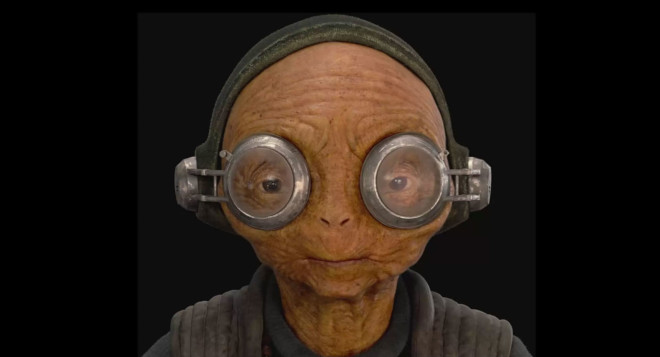

A lot of digital wizardry went into creating the new Star Wars watering hole proprietor. Here’s how ILM did it.
The post Design FX: How They Made the Incredible Effects of The Force Awakens appeared first on WIRED.

Source: Wired.com Top Stories
 For more than a decade researchers have been looking into the effects of online music piracy on the revenues of the record industry, with mixed results.
By now it’s clear that there’s no universal positive or negative effect of piracy on sales. The results depend on the type of artist, music genre and media, among other variables.
A newly published study by Jonathan Lee, researcher at Queen’s University Department of Economics, sheds an interesting light on these differences and unravels another piece of the puzzle.
In a working paper titled Purchase, Pirate, Publicize: The Effect of File Sharing on Album Sales, he examined the effect of BitTorrent piracy on both digital and physical music sales.
The goal of the study is to find out whether piracy’s sales displacement (piracy hurts sales) or the promotion component (piracy boosts sales) has a stronger effect.
“In theory, piracy could crowd out legitimate sales by building file sharing capacity, but could also increase sales through word-of-mouth,” Lee explains.
Drawing on a data set of 250,000 albums and 4.8 million downloads from a popular private BitTorrent tracker, he found some interesting effects. The overall results show a modest negative impact on album sales, as music industry executives would expect.
“From the results, I conclude that file sharing activity has a statistically significant but economically modest negative effect on legitimate music sales,” Lee writes.
Interestingly, however, this negative result is largely driven by physical sales. For many artists, piracy actually boosts digital sales, presumably because it serves as free advertising.
“This relationship varies by medium: file sharing decreases sales of physical copies but boosts sales of digital ones for top-tier artists, suggesting that the word-of-mouth effect is most relevant for the digital market.”
In addition, the popularity of the artists is an important factor too. More popular artists do relatively well as the boost in digital album sales compensates for the loss on the physical side.
“Top-tier artists lose sales, but the loss is partially offset by an increase in digital sales and the overall effect is small,” Lee writes.
Links between piracy and sales across various artists tiers
For their part, artists who are somewhat popular actually benefit from piracy while lesser knows musicians are hurt the most. The latter may be explained by the fact that these artists simply aren’t good enough for people to buy their work.
“Mid-tier artists are helped slightly and bottom-tier artists are significantly hurt by file sharing, which could indicate that file sharing helps lesser-known artists only if they are actually talented,” Lee notes.
The study adds to the never-ending debate on the effect of piracy on sales. It’s a good illustration that file-sharing can have both a positive and a negative impact.
One of the downsides is that the data itself is relatively old, from 2008, and the music industry has changed a lot since then. This means that the results may have been different today.
Also, it’s worth noting that the download numbers come from a BitTorrent tracker that counts a relatively high share of music aficionados. They may also act differently than the general file-sharer.
That said, the paper offers a unique and unprecedented analysis of BitTorrent piracy on music sales. It clearly disputes the general argument that music piracy exclusively hurts album sales, and suggests that BitTorrent piracy can act as promotion under certain circumstances.
Source: TF, for the latest info on copyright, file-sharing, torrent sites and ANONYMOUS VPN services.
Source: TorrentFreak