
Alex Proba is a designer who spent the past 1,000 days creating a new poster every day. The post 1,000 Days. 1,000 Surreal Posters. One … Unfortunate Design appeared first on WIRED.

Source: Wired.com Top Stories
Unrelated to the whiskey.

Alex Proba is a designer who spent the past 1,000 days creating a new poster every day. The post 1,000 Days. 1,000 Surreal Posters. One … Unfortunate Design appeared first on WIRED.
Source: Wired.com Top Stories


Each Saturday we round up the news stories that we didn’t break or cover in depth at WIRED, but which deserve your attention nonetheless. The post Security News This Week: The NSA Denied Hillary a Secure BlackBerry appeared first on WIRED.

Source: Wired.com Top Stories


Another year, another 9.7-inch iPad. The post Apple Needs a New Reason for You to Buy an iPad appeared first on WIRED.

Source: Wired.com Top Stories

 This week following further intense discussions on how to bring Internet piracy under control, rights holders submitted new proposals for amendments to local copyright law.
Supported by communications watchdog Roskomnadzor, one of the key aims of the working group is to bring an end to the game of whac-a-mole caused by the country’s site blocking regime.
Ending the proxy wars
Like other countries, once pirate sites are blocked by local ISPs, proxies, mirrors and clones of those sites reappear elsewhere, rendering the blockades ineffective. This means that copyright holders have to head back to court to obtain a new blocking order if they are to keep up with the pirates.
As is already loosely the case in the UK, rightsholders with interests in Russia want mirror and proxy sites to be classified as extensions of the original blocked site and given the same illegal standing. This would mean they could be quickly blocked without need for a new trial.
Currently the courts require an individual process for each site, a position highlighted recently when ISPs were ordered to permanently block huge torrent site RuTracker but several sites appeared online which effectively circumvented the blockade.
“The Working Group proposes to simplify the blocking procedures in respect of mirrors of sites that have already been recognized by the court as illegal resources,” National Federation of the Music Industry (Sony, Universal, Warner, EMI) chief Leonid Agronov explains.
Circumventing blockades? You can’t talk about that
While the proposed measures against mirrors, clones and reverse proxy sites are not unexpected, demands being made by anti-piracy group Association for the Protection of Copyright on the Internet (AZAPO) really take things to the next level.
Just as sites can take measures to avoid being blocked, users can circumvent blocks with a variety of tools including VPNs, TOR and other proxies. People learn about these techniques online but if AZAPO has its way – and that looks likely – telling people how to circumvent web-blocking measures will become an illegal act.
In a document penned by AZAPO, approved by telecoms watchdog Rozkomnadzor, and seen by Gazeta.ru, the anti-piracy group says that banning discussion of workarounds will enhance the country’s blocking regime.
“The introduction of [a system of fines] for those who promote methods for bypassing Internet blockades will enhance the effectiveness of blocking prohibited Internet resources,” the group writes.
At this stage the proposals suggest fines ranging from around $70 for “entrepreneurial individuals” right up to $14,500 for those operating within a legal entity but it’s not yet clear how these fines will be managed or enforced.
While discussion of circumvention could soon be off-limits, there’s no intention of banning circumvention tools outright. Noting that they have legitimate uses, Rozkomnadzor says it simply wants to draw a line in the sand over the way they’re promoted online.
“These technical software tools have a wide range of useful applications. But advertising these as a way to bypass website blocks should not be a legitimate action,” a spokesperson said.
Not surprisingly, representatives from the Internet industry see things somewhat differently. Karen Ghazaryan, principal analyst at the Russian Association of Electronic Communications, told Gazeta that tightening of the law will only lead to further dissemination of information detailing how to bypass blockades.
Indeed, there would be little the authorities could do about advice pages appearing outside the country, unless they wanted to enter into the biggest game of whac-a-mole ever seen.
Crucially, clamping down on discussion is unlikely to stimulate the market for legal content consumption among consumers, Ghazaryan says.
Presented this week, the draft proposals will now be sent to the Ministry of Communications for subsequent discussion in the State Duma.
Source: TF, for the latest info on copyright, file-sharing, torrent sites and ANONYMOUS VPN services.
Source: TorrentFreak

 Netflix has upped its anti-piracy efforts recently, by taking a more aggressive stance against subscribers who use VPN services.
These changes were implemented to appease the major movie studios, but Netflix is also taking measures to limit access to pirated copies of its own original programming.
During the past several weeks the company has started to report thousands of ‘pirate’ links to Google, asking it to remove these from search results.
With help from their anti-piracy partner Vobile, Netflix has targeted 71,861 links to allegedly copyright infringing material from torrent and streaming sites, most of which have indeed been removed.
The links in question all point to content owned by Netflix, including popular series including House of Cards, Narcos, Sense8 and films such as The Ridiculous 6 and A Very Murray Christmas.
Unlike other copyright holders Netflix is a relative newcomer when it comes to sending DMCA takedown notices to Google. The first request was recorded last December, targeting over 3,000 links at once.
Netflix takedown request
Netflix is targeting a wide variety of torrent, streaming and hosting sites, with uploaded.net and vodlocker.com being the prime targets.
In addition to reporting these links to Google, Netflix also appears to be reaching out to ‘pirate’ sites directly as recent listings for House of Cards and other Netflix originals are frequently removed.
While the takedown efforts are unlikely to make the piracy problem go away, Netflix likely hopes to frustrate pirates enough to convert them into paying customers. That is, if Netflix’s original programming is available in their country, which isn’t as logical as it may sound.
In any case, the takedown efforts are a notable change compared to the casual piracy attitude the company had a few years ago.
Previously, Netflix CEO Reed Hastings said that the company was not really bothered too much by people who pirate content via torrent sites. In fact, Netflix admitted to using piracy data to determine what shows they should license in different regions.
“Certainly there’s some torrenting that goes on, and that’s true around the world, but some of that just creates the demand,” Hastings said at the time.
Source: TF, for the latest info on copyright, file-sharing, torrent sites and ANONYMOUS VPN services.
Source: TorrentFreak


The new trailer for HBO’s tech-bro show is here—and full of LoLs. The post Silicon Valley Is Back! Now With More Unicorns! appeared first on WIRED.

Source: Wired.com Top Stories


Jeff Nichols has only made four films, but he’s already an auteur. Here’s how he did it. The post How Director Jeff Nichols Went From Rookie to Auteur in Just 4 Films appeared first on WIRED.

Source: Wired.com Top Stories


A startup called Civil has a new plan to make comments more, well… The post Want to Save the Comments From Trolls? Do It Yourself appeared first on WIRED.

Source: Wired.com Top Stories
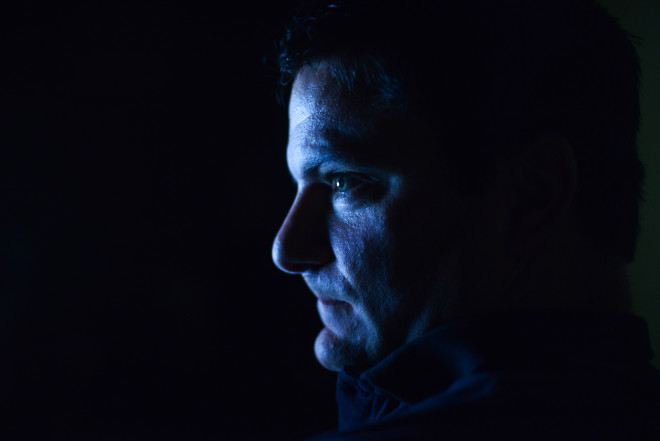

While Apple’s very public battle has dominated mainstream media, Lavabit’s case played out in secret under seal for many months. The post Long Before the Apple-FBI Battle, Lavabit Sounded a Warning appeared first on WIRED.

Source: Wired.com Top Stories


People who attend rallies experience a shift of personal identity to a sense of collective identity—and that can lead to strange, mob-like behavior. The post The Psychology Behind the Violence at Trump Rallies appeared first on WIRED.

Source: Wired.com Top Stories