
“It is now clear that the virus causes microcephaly,” says Tom Frieden, director of the CDC. The post Zika Causes Microcephaly, the CDC Confirms appeared first on WIRED.

Source: Wired.com Top Stories
Unrelated to the whiskey.

“It is now clear that the virus causes microcephaly,” says Tom Frieden, director of the CDC. The post Zika Causes Microcephaly, the CDC Confirms appeared first on WIRED.
Source: Wired.com Top Stories


This week, the best things to watch on TV were movie trailers, so that’s what we’re talking about on the latest installment of the WIRED Culture podcast. The post Culture Podcast: We Can’t Shut Up About the Suicide Squad Trailer appeared first on WIRED.

Source: Wired.com Top Stories


The former Tribune Company employee was convicted of giving Anonymous information that helped hackers access an LA Times server and alter a headline. The post Matthew Keys Sentenced to Two Years for Aiding Anonymous appeared first on WIRED.

Source: Wired.com Top Stories


Here’s how to distinguish the colors of the hacker rainbow. The post Hacker Lexicon: What Are White Hat, Gray Hat, and Black Hat Hackers? appeared first on WIRED.

Source: Wired.com Top Stories
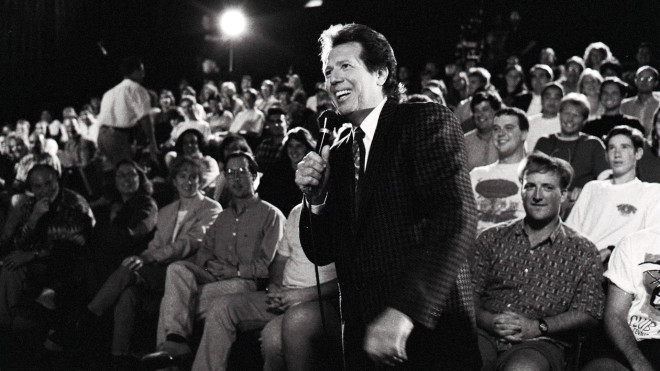

Earlier this year we lost one of comedy’s most unique voices when Garry Shandling passed. It’s time to binge-watch some of his best work. The post WIRED Binge-Watching Guide: The Larry Sanders Show appeared first on WIRED.

Source: Wired.com Top Stories

 Over the past weeks dozens of companies and organizations have shared their concerns regarding the current state of the DMCA copyright law.
The responses are part of a consultation launched by the U.S. Copyright Office. Most focus on the effectiveness of the notice and takedown model, and the response of anti-piracy firm CEG TEK International zooms in on how ISPs handle these notices.
The company is well-known for its collaboration with adult video companies, for which it targets individual Internet subscribers with settlement requests. These requests are sent through DMCA notifications, commonly demanding a few hundred dollars.
Some ISPs forward these requests but most large providers have chosen not to do so. This is problematic for CEG TEK as it hurts their business model.
“The problem is the roadblocks to enforcement of copyrights that are put up by online service providers to protect their relationships with their infringing customers,” CEG TEK’s attorney writes.
The anti-piracy outfit points out that they, and others, can easily track the IP-addresses of pirates. But, without cooperation from ISPs this information isn’t very helpful.
“Unfortunately, the ISPs, who rake in millions, and probably billions, of dollars from their infringing customers, do not voluntarily disclose the infringer’s identities,” CEG TEK notes.
Under the DMCA, Internet providers are not required to forward all notices of claimed copyright infringement. CEG TEK recommends changing towards Canada’s model instead, where subscribers must be notified.
“Canada’s ISPs forward such notices at no charge to copyright owners. Setting up forwarding systems is relatively easy and inexpensive, and is similar to ISPs normal bill-forwarding systems,” the company notes .
In this case, CEG TEK would like U.S. ISPs to forward their “bills,” but there is more.
In addition to a forwarding requirement the anti-piracy firm also suggests the introduction of statutory damages for Internet providers, requiring them to pay $30 each time a subscriber doesn’t stop sharing pirated content.
“By statute require ISPs to pay copyright owners $30 for each notice of claimed infringement sent with respect to an Internet account having repeat infringements,” the suggestion reads.
“Do this, and ISPs would actually enforce their own Terms of Use that currently give lip service to the concept that customers are forbidden from engaging in copyright infringement,” CEG TEK adds between brackets.
The submission is written by CEG TEK attorney Ira Siegel, who also represented several rightsholders in various lawsuits against “John Doe” BitTorrent users, as copyright troll watcher FCT points out.
Siegel’s “trolling” connection is relevant as he also proposes several changes to the DMCA in order to make it easier to identify pirates through courts. Among other things, CEG TEK suggests allowing mass-BitTorrent lawsuits, in which tens of thousands of IP-addresses can be grouped (joined) in one complaint.
Such a change would make it cheaper to uncover the identity of alleged infringers, as rightsholders would only have to pay a single filing fee.
The proposals put forward by CEG TEK are among the most far-reaching we’ve seen thus far. They also directly oppose comments made by the U.S. broadband association USTelecom, which asked the copyright office to stop “abusive” notices that include settlement demands.
Source: TF, for the latest info on copyright, file-sharing, torrent sites and ANONYMOUS VPN services.
Source: TorrentFreak

 MPAA chairman and CEO Chris Dodd made his fifth keynote speech at CinemaCon yesterday, pouring buckets of cold water on the idea that piracy is somehow threatening the very existence of the movie industry.
“I’m proud to say that the state of our industry has never been stronger,” the former U.S. senator said.
Indeed. Yesterday the MPAA released its latest Theatrical Market Statistics Report which revealed that global box office revenues reached $38.3 billion in 2015, up 5% on 2014’s total. The United States and Canada turned in $11.1 billion with international box office revenues hitting $27.2 billion.
“To paraphrase Mark Twain, the death of the movies has been greatly exaggerated,” Dodd said.
Exaggeration was the name of the game four years ago during the SOPA debate, when one might have been forgiven for believing that Hollywood’s very existence was hanging by a thread. But now, according to the MPAA itself, things could hardly be better, with 708 films released in 2015 and those released by MPAA members up 8% on the previous year.
Almost 70% of the U.S./Canada population (235.3 million people) went to the cinema at least once in 2015, a 2% increase over 2014. Frequent movie goers who attended at least once a month accounted for 49% of all tickets sold in the same region. Indeed, the number of tickets purchased by everyone from hardcore fans to the very casual viewer increased last year.
But despite the impressive numbers (full report – pdf), the MPAA insists that piracy is still a problem. According to Dodd the box office would be more healthy to the tune of $1.5 billion if piracy could be brought under control.
There are plenty of theories on how that can be achieved, including making content more readily available to the consumer. The plan currently making the most noise along those lines is being touted by Napster co-founder Sean Parker, whose Screening Room project hopes to bring first-run movies into the home via a set-top box.
While at first this might sound like a recipe for spoiling record box office revenues, Screening Room has a trick up its sleeve. Customers prepared to pay the required $50 to watch at home would get two tickets to watch the movie in the cinema, which could either boost or at least maintain box office attendance.
Nevertheless, those in the movie screening business are less optimistic. Last month The Art House Convergence (AHC), a cinema group representing 600 theaters, said it “strongly opposes” the plan and warned that it would only fuel torrent sites and piracy.
Interestingly, however, Chris Dodd told reporters yesterday that the MPAA would meet with the people behind Screening Room.
“I want to hear what they have to say,” Dodd said.
Reading between the lines though, it seems unlikely that the MPAA is seriously thinking of signing on the dotted line. In his speech yesterday Dodd repeatedly underlined the unique experience offered by a theatrical screening.
“Despite the noisy suggestions otherwise, the cinema provides a unique and powerful experience that just cannot be re-created,” he said. One of his colleagues made things even more clear.
“I assure you, we are not going to let a third party or middleman come between [the studio and the cinema owners],” Warner Bros. Entertainment Chief Executive Kevin Tsujihara said during his presentation.
And those cinema owners have been vocal too. As reported by the LA Times, National Assn. of Theatre Owners chief John Fithian yesterday described Screening Room as a “big distraction” from the great results published by the MPAA, noting that “it’s up to the exhibitors and the distributors to decide the future of [release] windows.”
Interestingly, however, Fithian acknowledged that there may be some room for change.
“More sophisticated window modeling may be needed for the growing success of a modern movie industry,” he said.
Parker, standing by.
Source: TF, for the latest info on copyright, file-sharing, torrent sites and ANONYMOUS VPN services.
Source: TorrentFreak


During the 2016 US Masters Oosthuizen had a shot that deflected off another ball to result in a hole in one on a par 3. Here is a look at the physics of this event. The post The Physics of That Crazy Ricochet Hole in One at the Masters appeared first on WIRED.

Source: Wired.com Top Stories


Marah Hardt is on a quest to investigate the elaborate mating rituals of life in the deep. The post When Your Job Is Researching (Animal) Sex on the Beach appeared first on WIRED.

Source: Wired.com Top Stories


A security bug dubbed “Badlock” by the company that discovered it has now been renamed “Sadlock” by critics who say they hyped the flaws. The post That ‘Badlock’ Bug Is More Hype Than Hurt appeared first on WIRED.

Source: Wired.com Top Stories