
Instagram has always been the friendly, open, and inclusive social media platform. Someone forgot to tell Trump that. The post Donald Trump Is Winning Instagram by Being Himself: A Big Troll appeared first on WIRED.

Source: Wired.com Top Stories
Unrelated to the whiskey.

Instagram has always been the friendly, open, and inclusive social media platform. Someone forgot to tell Trump that. The post Donald Trump Is Winning Instagram by Being Himself: A Big Troll appeared first on WIRED.
Source: Wired.com Top Stories
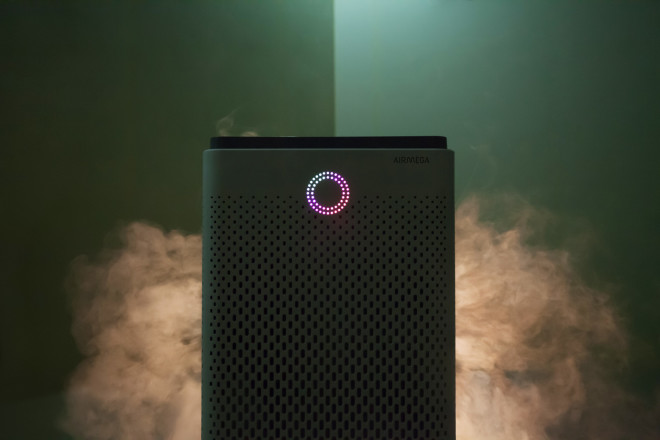

Take a deep breath, and try an intelligent air purifier to help you clear the air. The post This Air Purifier Has Brains and Doesn’t Look Like Garbage appeared first on WIRED.

Source: Wired.com Top Stories


Get the best stories from WIRED, delivered to your inbox daily. The post Never Miss a Thing: Sign Up for WIRED’s Newsletter Now appeared first on WIRED.

Source: Wired.com Top Stories


Once again, Kanye West ignited the Internet with a Twitter exchange this week. But it was politics that really prevented people from leaving their laptops. The post While You Were Offline: Well, Now We’ve Seen a Man’s Soul Leave His Body on Live TV appeared first on WIRED.

Source: Wired.com Top Stories

 In recent years copyright holders have overloaded Google with DMCA takedown notices, targeting links to pirated content.
These requests have increased dramatically over the years. In 2008, the search engine received only a few dozen takedown notices during the entire year, but today it processes two million per day on average.
Data gathered by TorrentFreak from Google’s Transparency Report shows that the number of links reported in DMCA notices has more than doubled compared to last year, and quadrupled in comparison to the year before.
March 2014 Google was asked to remove roughly six million links per week, growing to eight million in 2015 and a whopping 19 million last week.
As an illustration of the sheer volume, this means that Google is now being asked to remove well over 100,000 links to alleged copyright infringing material every hour.
The number of notices continues to increase at a rapid pace and at the current rate the search engine will have to process a billion reported links this year alone. This same milestone previously took well over a decade to reach.
The graph below illustrates this sharp rise in takedown notices.

While not all takedown requests are accurate, the majority of the reported links are. As a result many popular pirate sites are now less visible in Google’s search results, since Google downranks sites for which it receives a high number of takedown requests.
In a submission to the Intellectual Property Enforcement Coordinator a few months ago Google stated that the continued removal surge doesn’t influence its takedown speeds.
“We process more takedown notices, and faster, than any other search engine,” the search giant commented.
“We receive notices for a tiny fraction of everything we host and index, which nonetheless amounts to millions of copyright removal requests per week that are processed, on average, in under six hours.”
The company rejects broader actions, such as the removal of entire domain names, as this would prove counterproductive and lead to overbroad censorship.
Copyright holders, however, don’t share these concerns. Over the years groups such as the MPAA and RIAA have repeatedly argued that clearly infringing sites should be barred from Google’s index. In addition, they want Google to promote legal services.
While Google believes that the billion reported URLs are a sign that the DMCA takedown process is working properly, rightsholders see it as a signal of an unbeatable game of whack-a-mole.
As this stalemate continues, we can expect the number of reported pages to continue to rise in the future, adding millions of new URLs on a daily basis.
Source: TF, for the latest info on copyright, file-sharing, torrent sites and ANONYMOUS VPN services.
Source: TorrentFreak

 Last month Kanye West released his latest album The Life of Pablo exclusively on Tidal, triggering a piracy feast.
Millions of fans have grabbed a pirated copy from unauthorized sites and services, including The Pirate Bay. Angered by mass-piracy Kanye West considered taking legal action against the notorious torrent site, but thus far nothing has happened.
Instead, Kanye was caught browsing a Pirate Bay related website earlier this week and from the looks of it he was pirating a prominent piece of music software himself.
In a response, The Pirate Bay team offered their support, in case he ran into technical issues. In addition, they catered to his narcissistic tendencies by promoting the ego-boosting “Kanye Bay” proxy.
“Should Mr. West experience any issues accessing the official domains of the galaxy’s most resilient torrent site, I’d suggest he try this nifty little proxy,” TPB staffer Spud17 tells us.
Kanye Bay….
Aside from the aesthetic improvements, some words of wisdom and a direct link to pirated versions of Kanye’s music, the site acts as a regular Pirate Bay proxy.
TorrentFreak reached out to the operator of the unusual proxy who explained in detail how he came up with the idea.
“The other day, I came up with an equation that explains the way visionaries think as opposed to very calculated people,” Kanye Bay’s operator informs TF.
“If someone asked you, ‘What is 2 and 3?’ most people would say 5. If you put 2 and 3 in front of me, I’m gonna say, ‘Well, 2 plus 3 is 5. 2 times 3 is 6. 2 divided by 3 is this. 3 divided by 2 is that.’ And then come up with an average of all those things..,” he adds.
This visionary thinking eventually led to the creation of The Kanye Bay, which excels at serving torrents, compared to all other Pirate Bay proxies that ever existed.
“That is the thing people marvel at like, ‘That really was not what I was expecting’… Then I made KanyeBay.com and I was like, ‘Yeah. This sh*t is like 50 per cent more influential than any other proxy ever made’,” the operator says.
The Kanye Bay, like TPB, is all about sharing, not stealing. While Kanye West condemned The Pirate Bay earlier, he did not specifically object to people sharing his work.
This would also explain why Kanye West can threaten to sue The Pirate Bay while ‘using’ it at the same time. And rightly so, according to The Kanye Bay operator, who would rather not kill someone.
“I believe that being selfish is vulgar. It’s like cursing. I think the world can be saved through sharing, because what is the most selfish thing someone can do? Kill someone. So, piracy is like the opposite of that.”
“The Bible was copied like a million times and nobody ever got hurt.”
Amen. Even Yeezus would have to agree with that.
Source: TF, for the latest info on copyright, file-sharing, torrent sites and ANONYMOUS VPN services.
Source: TorrentFreak

 The Brazilian Civil Rights Framework for the Internet (Marco Civil da Internet) is legislation that governs the use of the Internet in Brazil. Under development since 2009 the Marco Civil aims to protect online privacy rights, net neutrality principles and other key issues.
The law was passed in April 2014 after being fast-tracked in the wake of the Snowden revelations. Last year the legislation entered its second stage with the Ministry of Justice announcing a public consultation process allowing stakeholders to contribute to the development of the law.
Of course, where legislation is available to be shaped Hollywood is rarely far behind and as a result the Motion Picture Association and its studio members quickly got involved. They believe that the Marco Civil’s net neutrality provisions present problems for rightsholders who need to be able to protect their content against online infringement.
Last year the MPA told Justice Minister José Eduardo Cardozo that the legislation’s wording was too tight and exceptions were needed to allow for anti-piracy enforcement. This week the public consultation came to a close and it’s now clear that the stance of the MPA is shared by many other rightsholders in the audiovisual sector.
In a proposal submitted by the MPA, the Brazilian Association of Intellectual Property (ABPI), Brazilian Association of Independent Television Producers (ABPI-TV) and Brazilian Association of Audiovisual Works Production (APRO) and others, demands for site-blocking are front and center.
In common with other regions where site-blocking measures have been introduced, the MPA wants Brazil to order its Internet service providers to block ‘pirate’ sites located outside the country, beyond Brazil’s jurisdiction. It’s expected that the existing legal system will deal with those hosted domestically.
“Although foreign [pirate site] hosts can not be forced to delete the illegal content from their servers, access to these can be hampered by technical measures implemented by Brazilian Internet service providers,” the proposal reads.
According to local media this is the first time that cinema associations, large Brazilian producers and Hollywood studios have joined together under one banner.
“We can not accept that the Internet is a free area for lawlessness,” said Edson Vismona, president of the umbrella group National Forum Against Piracy and Illegality (FNCP).
“Our mission is to set some milestones to show that illegality will not prosper. We have to respect all the principles of freedom of expression, but not actions that violate citizens’ basic rights.”
The group says that if Brazil implements the required measures it will be in good company since countries including Argentina, Mexico, Chile, Colombia, the UK, Portugal and Spain already engaged in site blocking.
Of course, the great irony here is that while the MPA demands site blocking of Brazil, there is no site blocking taking place in the United States. Nevertheless, the MPA and its colleagues want a “clear provision for site blocking techniques” and exceptions written into the Marco Civil.
Only time will tell if they will get their way.
Source: TF, for the latest info on copyright, file-sharing, torrent sites and ANONYMOUS VPN services.
Source: TorrentFreak


On this week’s “Geek’s Guide to the Galaxy” podcast the panel discusses how Hollywood’s latest Biblical epic falls short—and how it could’ve been better. The post Risen Started Out Great—Then Came the Random Cloud of Bats appeared first on WIRED.

Source: Wired.com Top Stories
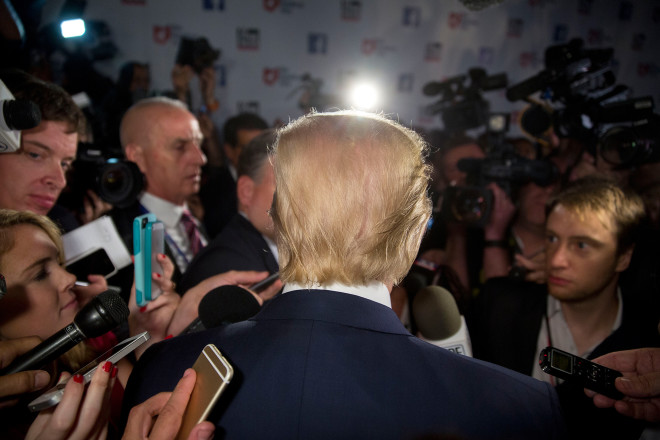

We always said the man was a walking, talking Twitter stream. The post We Found a Totally Real Copy of Donald Trump’s Canceled CPAC Speech appeared first on WIRED.

Source: Wired.com Top Stories


Engineering students have discovered a way to reflect Wi-Fi packets instead of broadcasting them. The post The Future of Wi-Fi Is 10,000 Times More Energy Efficient appeared first on WIRED.

Source: Wired.com Top Stories