
For a real laugh, look no further than the original patent applications of your favorite old-school novelty products.
The post What’s Inside Silly String: The Secret’s in the Solvent appeared first on WIRED.

Source: Wired.com Top Stories
Unrelated to the whiskey.

For a real laugh, look no further than the original patent applications of your favorite old-school novelty products.
The post What’s Inside Silly String: The Secret’s in the Solvent appeared first on WIRED.
Source: Wired.com Top Stories


Step aside, J.K. Rowling: A graphic rap anthology is coming for the throne.
The post How One Man and His Twitter Army Stormed the Bestseller List appeared first on WIRED.

Source: Wired.com Top Stories

 The anti-piracy business is booming, with thousands of companies making a decent living by helping rightsholders to protect their work.
London-based MUSO is one of these outfits. The company has been around for a long time and has evolved into one of the most active senders of DMCA notices to Google.
Just two years ago MUSO received a £250,000 “Smart Award” grant from the UK Government’s Technology Strategy Board, to improve and expand its piracy tracking technologies.
Despite this cash injection MUSO’s data gathering technique is far from optimal. A few weeks ago, for example, we pointed out that many of the takedown notices it sends are bogus.
In addition to sending takedown requests the company also collects file-sharing statistics, which they offer to copyright holders as business intelligence. Unfortunately, these systems are not without mistakes either.
A few days ago the following tweet from MUSO’s official Twitter account caught our eye, announcing “The Walk” as the most uploaded film that week.

To us this was quite a surprising result, because there are only a few low quality copies of The Walk on torrent sites. With just a few hundred people sharing, those are not popular at all compared to other pirated films.
So what happened here?
Well, after giving it some thought we realized that MUSO’s data gathering tool has omitted a crucial element. Instead of looking at entire filenames it appears to have checked the total uploads of all files with the words “The Walk” in there, while forgetting to filter out “-ing Dead.”
This means that in addition to the few thousand “The Walk” uploads last week, it also counted the millions of uploads of “The Walk/ing Dead.” This makes sense, since The Walking Dead was the most shared TV episode by far that week.
Ouch.
Of course mistakes can happen everywhere, especially with companies that have to rely on filters to sift through massive amounts of data. What’s most troubling though, is the fact that the result was proudly shared with the rest of the world, without a proper check.
Apparently nobody at MUSO noticed the error, and neither did any of their followers, as the tweet is still online after more than a week.
Whether anyone will walk the plank as a result of this embarrassing error is doubtful. However, we would argue that the Government’s “Smart Award” might not have been the best investment of UK tax payers’ money.
Source: TorrentFreak, for the latest info on copyright, file-sharing, torrent sites and ANONYMOUS VPN services.
Source: TorrentFreak


Race control called it a day here in Austin at 4 pm, pushing qualifying to Sunday morning and guaranteeing a busy day for the drivers.
The post Today’s Storm Sets Up a Very Exciting F1 Race Day appeared first on WIRED.

Source: Wired.com Top Stories
 As reported last week, the RIAA and MPAA have recently made their respective submissions to the US Trade Representative, each detailing lists of the world’s ‘rogue sites’ and ‘notorious markets’. Unsurprisingly, several are hosted in Ukraine.
The MPAA singled out two sites. First up Kinogo.co, a streaming links site that the industry group says enjoyed around 23.5 million visitors in August ’15 alone. Also under fire was ExtraTorrent.cc, one of the world’s most popular torrent indexes. Hollywood happily piled on the drama.
“Extratorrent.cc claims astonishing piracy statistics: offering almost 1.4 million free files with sharing optimized through over 43 million seeders and more than 60 million leechers,” the MPAA wrote.
But it was the RIAA’s report that referenced the war-torn country most often. Ukraine-hosted piracy sites were mentioned several times, adding Torrentreactor.com, file-hosting giant EX.ua, NewAlbumReleases.net, MP3va.com, MP3caprice.com and Bajui.com to those already mentioned by the MPAA.
Current criticism is not dissimilar to that piled onto Ukraine in previous years, a situation that has landed the country on the USTR’s trading blacklist for its alleged trampling of U.S. intellectual property rights. However, it now appears that Ukraine wants to improve its standing with the United States.
According to an announcement from the Ministry of Economic Development and Trade, a meeting of Ukraine’s Cabinet of Ministers on October 21 approved draft legislative amendments aimed at the “protection of copyright and related rights on the Internet.”
The amendments, which reportedly include “effective mechanisms” for combating online piracy, will be submitted shortly to the Supreme Council of Ukraine. According to the government the draft was developed “in consultation with representatives of business associations” and the owners of hosting providers.
The Ministry says that those consulted suggested the introduction of a number of tools designed to prevent the spread of pirated content. They include the “pre-trial deletion” and/or “restriction of access” to copyright-infringing content, which sounds a lot like DMCA-style takedowns and Russia-style site-blocking.
Also on the table are financial penalties, which could see services that fail to remove or block access to infringing content hit with fines of between 500 and 1,000 times minimum income levels. Similar fines are also on the table for services which fail to identify users who post copyright-infringing content.
Deputy Minister of Economic Development and Trade Yulia Kuznetsov said that the measures are essential for regaining the confidence of external trading partners.
“Copyright protection as a key asset in any business and is a prerequisite for attracting investment in Ukraine,” Kuznetsov said.
“It is therefore important to get rid of the dubious image the country has with its high levels of Internet piracy. This requires effective mechanisms for blocking pirated content. Such mechanisms are inherent in the bill. Their use will launch an effective fight against Internet piracy.”
That the measures are designed to warm relations with Hollywood, the record labels and their friends at the USTR, is made clear by Lena Minich, Director at the Department of Innovation and Intellectual Property.
“This bill is another step towards creating a favorable investment climate in Ukraine,” Minich said.
“Also, it will prevent the use of economic sanctions against Ukraine as a ‘priority country’ in the [USTR’s] ‘Special 301 Report’ and brings Ukraine’s legislation into line with EU countries.”
The bill is part of a package of intellectual property amendments which also aim to tackle patent trolling, rights in software development, plus issues with royalties and collection societies.
Whether the anti-piracy measures under consideration will be enough to appease the United States will remain to be seen. In the meantime, Ukraine remains on the USTR’s ‘naughty step’ and the pressure continues.
Source: TorrentFreak, for the latest info on copyright, file-sharing, torrent sites and ANONYMOUS VPN services.
Source: TorrentFreak


An incredibly strong weather system has doused the Circuit of the Americas with six-plus inches of rain, flooding the track and delaying the race by hours
The post You Can’t Even Believe How Much Rain There Is in Austin appeared first on WIRED.

Source: Wired.com Top Stories


Rain’s put today’s F1 racing on hold, and teams are getting a bit stir crazy.
The post If F1 Drivers Can’t Race, They Start Dancing appeared first on WIRED.

Source: Wired.com Top Stories
 Under U.S. law streaming and file-sharing are seen as two different offenses. Not just from a technical point of view, but also in the way they are punished.
Streaming is categorized as a public performance instead of distribution, which can only be charged as a misdemeanor, not a felony.
Lawmakers tried to change this with the Commercial Felony Streaming Act in 2011, and later with the SOPA and PIPA bills. These bills were shelved after public outrage, with many people fearing that uploading copyrighted YouTube videos could possibly land them in jail.
As a result the gap between streaming and traditional file-sharing still remains today, However, several large filmmaker unions hope it will reappear on the political agenda soon.
This week Directors Guild of America, Inc. (DGA) and the International Alliance of Theatrical Stage Employees (IATSE) responded to a public consultation by U.S. Intellectual Property Enforcement Coordinator (IPEC) Daniel Marti, who asked for comments on the new Intellectual Property Enforcement plan.
“Our members are clearly greatly harmed by copyright infringement and digital theft,” the unions write. “Digital theft erodes their ability to earn a living and feed their families, and it depletes the vitality of their pension and health plans.”
Traditionally there has been a strong focus on P2P file-sharing piracy, but the unions write that streaming is slowly taking over. The problem, according to the unions, is that the law still sees it as a lesser offense.
“While illegal downloading of our members’ creative works remains the best known method of Internet theft, illegal Internet streaming has actually become the preferred viewing and listening experience,” they write.
“Unfortunately, the law has not kept pace with these new consumer habits. While illegal downloading and distribution is a felony, the illegal, willful, and commercial streaming of films, TV programs, and music remains only a misdemeanor.”
In their submission (pdf) the filmmaker unions refer to the failed Commercial Felony Streaming Act which would have leveled the playing field. According to them, this bill should be brought back to the table.
This would allow the Department of Justice to prosecute streaming pirates as well, which is not so straightforward at the moment.
“We believe that the law should reflect the reality of the digital world. Quite simply, The Commercial Felony Streaming Act would not have criminalized any behavior that was not already considered criminal.”
“Instead, it would have equalized the penalty so that digital thieves would not be free to steal content via streaming when they would be prosecuted as a felony were they to do so via a download.”
While the public may not like the proposed changes, there’s a good chance that they will indeed be introduced again. Last year the Obama administration hinted at a renewed effort to criminalize streaming.
Any future bills will most likely be targeted at the operators of streaming services and sites, but depending on the exact language it could also affect a broader group of people.
In their letter the unions encourage the administration to continue this plan and integrate it into the 2016 – 2019 Joint Strategic Plan on Intellectual Property Enforcement, which will be released in a few months.
“We support the Administration’s determination that the law should be amended to address this issue and would work with the Administration to revitalize this legislation and bring it back to the forefront of the IP enforcement conversation,” they conclude.
Source: TorrentFreak, for the latest info on copyright, file-sharing, torrent sites and ANONYMOUS VPN services.
Source: TorrentFreak
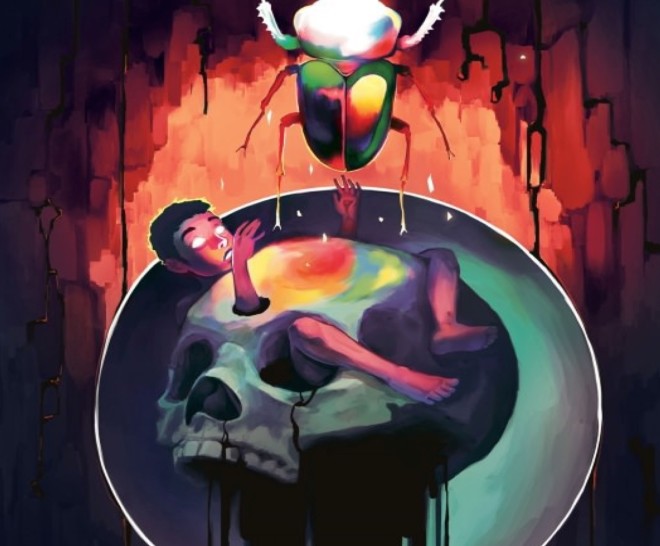

On this week’s episode of ‘Geek’s Guide to the Galaxy,’ the panel discusses the representations of LGBT characters in horror.
The post Queer Horror Is Stepping Out of the Shadows appeared first on WIRED.

Source: Wired.com Top Stories


Space photos of the week, October 18–24.
The post Space Photos of the Week: These Double Stars Gotta Go appeared first on WIRED.

Source: Wired.com Top Stories
